http://www.universetoday.com/2006/09/13/polar-ice-is-melting-fast/
Sunday, May 25, 2008
Arctic Tale
http://www.universetoday.com/2006/09/13/polar-ice-is-melting-fast/
It is gonna' rain some more!
When drops of water start to pour,
It is gonna' rain some more, some more!
Why do drops of water pour?
Drops of water pour?
The clouds can't hold them anymore,
That's why drops of water pour!
It is gonna' rain some more, some more,
It is gonna' rain some more!
When drops of water start to pour,
It is gonna' rain some more, some more!
by Meish Goldish
How is weather used in the poem: Weather is used in the poem because the author is describing rain and the reason for rain.
How does the poets knowledge of weather enhance the poem: The author's knowledge of weather enhances the poem by making it more informative. For example, when the author says the reason for rain is because the clouds can't hold the water anymore, that enhances the poem.
What type of weather is discussed: The type of weather being discussed is rain.
Would the poem be the same without the mention of weather: No, if there wasn't any mention of rain in the poem then there would be no poem at all because the main topic of the poem is rain.
What literary techniques are used in the poem in regards to weather: The literary technique used in this poem is repetition because there is a constant repetition of lines in the poem. In addition, rhyme is also used because the last word in each line rhymes.
Does this poem further your knowledge about weather: No, I basically already knew everything that is stated in this poem.
Wednesday, April 16, 2008
Computers 30 years ago
Friday, January 25, 2008
Alfred Bernhard Nobel
For more information on Alfred Bernhard Nobel click here and here
http://www.science.gov/
What is this site about?
This website has over 50 million pages of authoritative science information provided by U.S. government agencies The articles include current as well as old research and development in science. The topics range from astronomy to global warming to environment and much much more. Basically, information on any research topic can be found on this site.
The positive aspects of the site:
A positive aspect of this site would be that it's currently updated. It was updated last on 1/17/08. Another positive aspect would be that there are so many science articles that you will probably always find what you're looking for.
The negative aspects of the site:
The only negative aspect of this site would have to be that it has too much in formation about each topic that it's hard to find the exact thing that you're looking for. Even though, it is probably there it might take some time to look for a specific topic.
What could this site be used for:
This website could be used for researching information on all science topics. The topics range from astronomy to global warming to environment and much much more.
Would you reccommend this site for future use:
Definiately! The site is currently updated so you can always find exactly what you're looking for.
So Visit http://www.science.gov/ now!Search capabilities provided by DOE/OSTI and USGS Web sites by Topic maintained by CENDI. USAJOBS :: Grants :: Regulations.gov
Monday, January 7, 2008
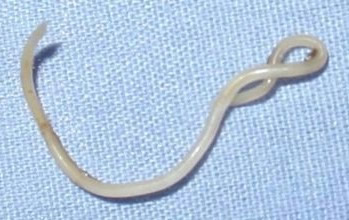
Worms
visit these websites for more information:
http://staff.tuhsd.k12.az.us/gfoster/standard/bworm.htm
http://www.smithlifescience.com/GlobeChapter9Worms.htm
Stop global Warming-Take Action now before it's too late!
Save the earth from being destroyed and take action now!
Friday, December 14, 2007
Could Saturn's Rings be Older Than the universe?
http://dsc.discovery.com/news/2007/12/13/saturn-rings.html?dcitc=w19-502-ak-0000
Tuesday, November 20, 2007
Mythbusters Extra Credit
Friday, November 2, 2007
Things about me
Each player answers the six questions posted on this blog.
The rules of the game are posted at the beginning before those answers are listed.
At the end of the post, the player then tags 8 people and posts their blog names, then goes to their blogs and leaves them a comment, letting them know that they have been tagged and asking them to read your blog.
Then follow the instructions about adding a page element at omegascience.blogspot.com.
1. My favorite TV show is.......(explain why)
My favorite show is Hannah Montana because it's hilarious!
2. My favorite meal is...... (explain the meal in detail)
My favorite meal is anything mexican. But most of all I love crunchwraps because I love sour cream, cheese, and beans.
3. My favorite nonschool activity is...... (explain why but do not give specific names that can identify you)
My favorite nonschool activity is going bike riding to the park or anywhere. I love bike riding with my friends because it's just fun to hang out on bikes.
4. Someone I look up to is....... (explain why)
I look up to my parents the most because they are always there for me whenever I need them. They set a good example to me and show me how to treat others. (even though already know)
5. My goal for the future is.....
My goal in the future is to become some type of docter, probably an eye docter because I'm interested in science more then any other subject. Or else I might become an astronomer because I like studying the sky, especially black holes.
6. In the first hour after school I usually do...... (explain why but do not give specific events or names that can identify you)
I usually eat snack and watch tv when I get back from school. Sometimes I do my homework so I could get over it and do other fun things later on in the day.
people I tagged: chocolatelover0901 glowriter54 cuddlybear94 sapphirestar1710 bluesoccer18 omegapeep bluesoccer18 softballgurll13
Tuesday, May 15, 2007
Longitudinal and Transverse waves
For more information visit: http://www.kettering.edu/~drussell/Demos/waves/wavemotion.html
Friday, April 20, 2007
Antartica was Warm in the past?
On April 20, 2007 tiny fossil diatoms were discovered deep down in the ocean floor. This revealed a significant truth about Antarctica's past about 10 million years ago. Yes, it is true that it was much much hotter in the past. Let me start at the beginning so that you get it. First it was cold and there was a lot of ice in Antarctica. Then it became really hot in the middle, which the scientists very recently learned. Now, it's cold again. The scientists working on this topic were very surprised by the single-celled algae. They had never seen some of these diatoms and others they had only seen in waters with really really high temperatures. Scientists say that these diatoms are new to science and will help them understand future climate changes. Now their new goal is to recover sedimentary records close to Antarctica so that they can learn about Antarctica's history and understand how it's related to global warming. Hopefully, global warming will not occur again, but be prepared just in case...
To learn more about global warming visit:
http://news.bbc.co.uk/2/hi/science/nature/6570185.stm
Wednesday, April 18, 2007
Memory
For example, you would remember that you had a party yesterday, but you'd forget who left before Anne. Well, on April 18, 2007 Jan Born and her research group discovered that long- term memories are formed while sleeping. This process relies on the brain replaying recent events during the night. The scientists also realized that sleeping not only strengthens your memory, but it also lets you remember the order that the events occurred. They even did an experiment to see if their results were really right. For the experiment a few students were asked to learn triplets of words one after another. The next day they tested each student and only the ones that had slept were able to determine the order of the words. However, they could only remember when they recited them in a forward direction not a backwards one. In the end, every student needs at least 8-10 hours of sleep if they want to do well in school!
http://brightsurf.com/news/headlines/30003/Sleep_enforces_the_temporal_sequence_in_memory.html
Wednesday, April 11, 2007
THE SUN
Tuesday, March 27, 2007
Black Holes
visit this website for more information
http://www.brightsurf.com/news/headlines/29304/New_panorama_reveals_more_than_a_thousand_black_holes.html
Tuesday, March 6, 2007
Heroes
Sunday, March 4, 2007
TO KILL A MOCKING BIRD
Saturday, January 13, 2007
Cells
A cell is the smallest complete piece of a living thing. cells are like building blocks because they go together to form whole plants, animals, and any organisms. They are living things and need water, food, air, and energy. In order for them to obtain these resources they have to absorb them through their cell membrane. They are also a structural and functional unit of all living organisms.
How many cells do organisms have?
The amount of cells that organisms have varies. some organisms such as bacteria may be unicellular and consist of only one cell. Other organisms such as humans are multicellular and have around 100,000,000,000,000 cells.
What is the cell theory?
The cell theory was developed in 1839 by Schleiden and Schwann. It states that all organisms are composed of one or more cells. This means that all cells come from preexisting cells.
What can cells do?
Each cell has its own set of directions. It has to take in nutrients and convert them into energy. Some cells carry out functions. Others reproduce if necessary.
What types of cells are there?
There are two types of cells that all other cells fall in. There are Eukaryotic and prokaryotic. Eukaryotic cells are found in multicellular organisms, have nuclear membrane, and are ten times the size of prokaryotics. Prokaryotics are found in unicellular organisms, are small, and lack in nuclear membrane.
What is metabolism?
In successive cell divisions cells grow through the functioning of cellular metabolism. This is the process in which individual cells process nutrient. first the cells break down complex molecules to produce energy and reduce power. Then the cells use all that energy to construct complex molecules and to perform other biological functions. When cells use this process they can brek sugar that the organism has consumed into a less chemically-complex molecule called glucose. Then the glucose is broken down into ATP, which is a type of energy.
What is cell division?
This process involves a single cell dividing into two daughter cells. This process leads to growth in a multicellular organism. Prokaryotic cells divide by binary fission. Eukaryotic cells usually go through a process called mitos followed by the division of cells called cytokinesis.
Overall, cells are a cool topic to learn about visit this website for more information. http://web.jjay.cuny.edu/~acarpi/NSC/13-cells.htm
http://en.wikipedia.org/wiki/Cell_(biology)
Gregor Mendel
Gregor Mendel was an important scientist who developed a method of cross-pollination when he was in Eastern Europe. He was born in 1822 and died in 1884.
What did Gregor Mendel do that was important to genetics?
Gregor Mendel did many things that were important to genetics. First of all, he experimented with pea plants. By experimenting with pea plants he discovered the method of cross-pollination. He picked pea plants to experiment with for many reasons. He picked them because they grew easily in large numbers and their reproduction could be manipulated. In a pea plant there is both male and female reproductive organs. This means that they can either self-pollinate themselves or they can cross-pollinate with another plant. In Mendel's experiments he was able to cross-pollinate purebred plants with traits. He also discovered what happens in the transmission of heredity traits from parents to children. He learned that some traits of parents don't pass onto their offspring.
What are some results that he came up with after experimenting with pea plants?
After experimenting with pea plants Gregor learned that the first offspring generation always have yellow pea plants. The second generation always has a ratio of 3:1 of yellow to green offspring.
What are the three main conclusions that Mendel came up with in his life?
He learned that the inheritance of each trait is determined by the genes that are passed on to the offspring unchanged. Mendel discovered that an individual inherits one unit, from each parent, for each trait. Lastly, he learned that a trait might not show up in an individual, but can still be passed onto the next generation.
http://anthro.palomar.edu/mendel/mendel_1.htm
Icy Weather
In Tulsa, Oklahoma the weather has gotten freezing. On Friday, freezing rain fell and there was a huge windy storm. The storm left several states coated in ice. This storm has also been very deadly. In fact, at least two deaths have been blamed on this storm. In addition, a few schools closed down early and dozens of flights were delayed. Some people predict that this is going to be a very long-term event.
In Kansas, several inches of snow was expected at the end of the week. A few deaths were blamed on this storm as well. One of the deaths that was blamed on this storm was of a 16-year-old boy who was riding to school on a pick-up truck. While he was riding to school the truck slipped on ice and overturned. The same thing also happened to an 81-year-old man.
In Oklahoma City a lumber truck flipped on an icy interstate 44 off exit ramp Friday.
Unfortunately, because of all these deaths and injuries we will have to be much more careful from now on.
http://news.yahoo.com/s/ap/20070112/ap_on_re_us/winter_blast